
I’m still sleep-deprived, but I have a Big Idea I want to try to express. Let’s see how I do with that. It won’t be perfect, but we can talk in the comments and make it perfect. And if you want background reading, here, and here, and here, and here are some other posts I did on the history of box office.
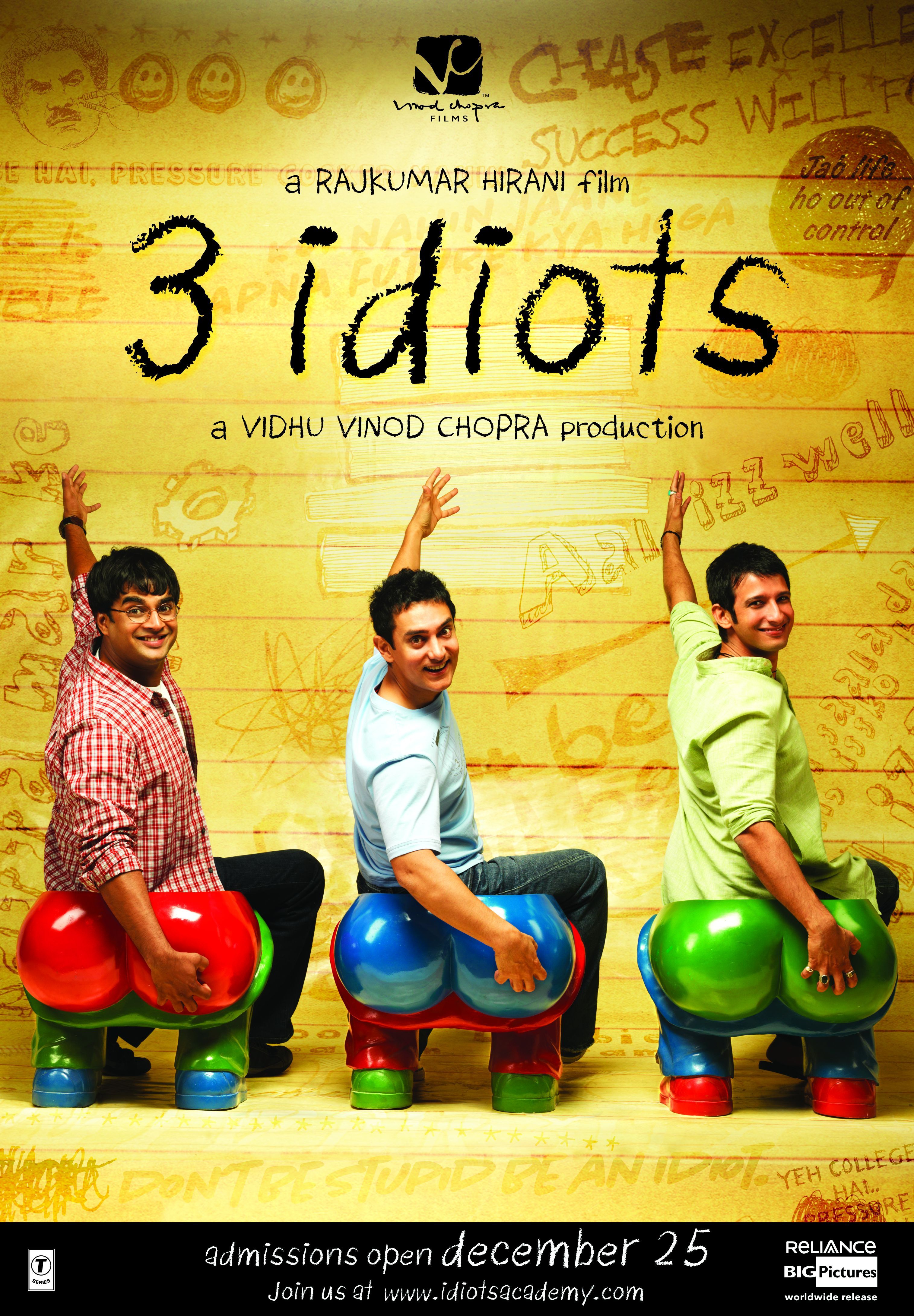
In 2009, at the start of this decade, 3 Idiots released and became the first Hindi film to break 200 crore at the box office. And this was a major step backwards for the Hindi film box office.
In raw figures, 200 crore broke records. But in terms of the value of money, it was one of the worst “blockbuster” films in the history of Hindi film. Runaway inflation in India means that in just a decade the value of the rupee had more than halved. And the value continues to drop. 200 crore in 2009 money is 390 crore in 2019 money. And in 1996, Aamir’s film Raja Hindustani made “only” 76.34 crore which also equals 390 crore in 2019 money. The basic value of film box office has not changed in decades, it is the value of the rupee which has changed.
No, that’s not true. The basic value of film box office has been dropping for decades. Between 1960 and 1984, there were 5 movies (Mughal-E-Azam, Ganga Jumana, Bobby, Sholay, and Disco Dancer) that in 2019 values made over 1,000 crore in their box office.
The value of the rupee dropping means the number of rupees needed to purchase a movie ticket has gone up in a predictable fashion. But starting in the early 2000s, it has also gone up in an unpredictable fashion. Once film became a viable investment opportunity thanks to government deregulation in 1999, suddenly outside investors were interested in opening movie theaters. At the same time, that same spirit of deregulation lead to a boom in the urban middle-class. Thus the “multiplex” was born. Tickets up to 10 times higher prices than the standard allowance for inflation increase would give.
That same spirit of outside investors made film box office figures suddenly public and important. In the “olden times” of just 20 years ago, box office figures were not quoted and well-known, instead what was promoted was the length a film ran. How long was the audience still packing in every Friday, how long were theaters still making profits? 5 weeks? 10 weeks? 20 weeks? 50 weeks?

The old time movies were looking for an audience that would completely fall in love, that would tell their friends about this wonderful movie, that would keep coming back over and over again. The ticket prices were so cheap, you could barely make a profit in the first week even if it was a total sell out. Instead, you hoped for a sell out week after week after week.
And then in 2009, the multiplex owners union and the movie producers union reached a breaking point and the filmmakers went on strike. And lost. The multiplex owners forced them to the bargaining table and pushed through the contract they wanted. The first weekend a film released, producers/distributors got the maximum percentage of the box office. Every week after that, it fell. Suddenly there was no reason to make a movie that would grow on word of mouth, you needed a film you could sell to a lot of people one time.
3 Idiots was that movie. In just a few weeks, it made as much money as Raja Hindustani made in a full year of its first run release. It was big, it was fun, it was unobjectionable. And suddenly it was the movie everyone wanted to make.
In the 10 years since 3 Idiots, we no longer expect films to be in theaters longer than a few weeks. We expect the majority of their box office to come from the first weekend. And we doubt we will ever want to see a movie a second time in theaters, or at all. It’s the potato chips of movies, you can’t stop yourself from watching it but as soon as it is over, you feel empty and a little ill with no wish to come back and see it again.
Between 1990 and 2000, the top box office films were Dil, Saajan, Beta, Aankhen, Hum Aapke Hain Koun, Dilwale Dulhania Le Jayange, Raja Hindustani, Dil To Pagal Hai, Kuch Kuch Hota Hai, and Hum Saath Saath Hain. They had no special effects, most of them didn’t even have an overseas song sequence. They were made by family studios, meaning studios run by a handful of family members all pitching in together. They had hardly any English dialogue, and no overseas talent involved. No singer, or composer, or cameraman, or promotion house contracted from outside of India. They were “small” films in that way. But in terms of longevity, they have something the post-2010 films will never have.
These were the last films of the old era. They ran in theaters for weeks, in some cases years. And their TV broadcast was eagerly awaited, a massive memorable occasion. Finally, their VHS and DVD tapes became staples of every Hindi speaking home, in India or overseas. Can the same be said about, for instance, PK? It was the top film of 2014, but does anyone even remember a single song from it? Did Sushant Singh Rajput’s role in the film have the impact on his career of, for instance, Akshay’s cameo in Dil To Pagal Hai?
Change doesn’t happen immediately, it took years after the multiplex revolution for a film like 3 Idiots to release aimed at the big early box office from the wealthy ticket buyers. And it took years after 3 Idiots for the industry to shift to the concept of “big films” as the norm. Big films, with small hearts. Not so coincidentally, as Hindi cinema moves more and more to films that are created by focus groups and marketing concepts as much as heart and soul, for the first time Telugu films have started to break into their markets. Enthiran in 2010, and then both Bahubalis in 2014 and 2018.
The “Big” films steadily chased the “small” films out of theaters over the past 10 years. A Sholay or DDLJ which grew on word of mouth over the first few days couldn’t survive today’s market. It would release, and within 4 days would be shoved aside for the next major “Big” film. There is no space for the audience to fall in love any more, and no time for it. Every new film has to hit hard, wide, and fast.
And now here we are. The small films are relegated to the small theaters for a 4 day run, or drive’d straight to Netflix and other streaming services. The big films have ever diminishing returns, producers and theaters losing money as they pay exorbitant amounts, so much money that even a record breaking box office can’t bring it back. Theaters are turning into ghost towns as the ticket prices go up and up, chasing an impossible ever moving finish line.
This isn’t the first time we have been here in Hindi film, although we took a new route to get here. In the 1970s, Amitabh Bachchan’s films set such massive records of popularity and box office that soon the industry became entirely focused on him. As the same sort of movie was made over and over again, the audience drifted away. Until only the last remaining group was standing, young men. Young men have the freedom and disposable income to go to the movies more easily than any other group. And so the 80s in Hindi film pandered primarily to that audience. Now, rising ticket prices and falling variety of film have once again driven away almost all the audience, with only young men left. 2019’s hit films were almost entirely aimed at the young man audience.
We enter the next decade with a strange divide in Hindi cinema. On the one hand, there are the big box office hits, films with angry cool young male heroes from rappers to students to soldiers. And on the other hand, there is the steadily growing number of throwback films, 90s style films that run for weeks at a time as the (much larger) audience of non-young-men slowly hears about them and finds them. At the top of the top 20 box office list we have War, Uri, and Kabir Singh. And in the bottom we have Chhichore, Dream Girl, Bala, De De Pyaar De, and on and on. Hindi film may be dying, strangled to death by high ticket prices and the quest for a high box office, but there is life in it yet. Let us hope the next decade sees a resurgence as the small films break the strangleholds of price and space and find a way forward.
 dontcallitbollywood
Thanks for this post! It’s a nice contrast to one I read a couple of weeks ago in Senses of Cinema (http://sensesofcinema.com/2019/cinema-in-the-2010s/secret-superstars-revolt-by-stealth-in-modi-era-bollywood/) that looks at the past decade in Hindi films and argues that there’s been a relative lack of change over the years. Of course, it self-admittedly views the films through more of an anthropological lens than your own.
LikeLike
Yeah, I went with straight box office promotion business side of things instead of message and meaning. I’m just sick of message and meaning. Money is more interesting!
LikeLike
“Follow the money” as they say!
LikeLike
If I’m getting this right, your read is higher financial stakes + dropping footfalls = death spiral of rising ticket prices and formulaic plots, geared to a narrower and narrower slice of the audience? That’s sound. I’m intrigued by the parallel to the 70s and 80s. I don’t think it’s a question of smaller films getting a bigger audience share. To change that dynamic you need to somehow shift the culture so it becomes a normal thing for more people to go to the movies again. How do you do that? How did they get the audience back the last time?
LikeLike
Oh last time was one of those impossible miracle things! A story industry scholars/historians/watchers love to tell. Hum Aapke Hain Koun, in one weekend, changed the whole world.
VHS technology came in during the 80s, similar to streaming it meant that the culture shifted along with technology. VHS was oriented towards the “home” audience, women and children and elderly people, basically everyone but young men. Movie theaters became all male arenas, no longer considered “safe” for women and children. Not 100% of course, there were still random hits like Maine Pyar Kiya and Qayamat Se Qayamat Tak that were oriented more towards a family/female audience. But there appeared to be a permanent shift where women and families stayed home and men went to theaters as a common thing.
And then HAHK released and changed EVERYTHING. Women and families just poured back to the theaters for that movie, and it broke the mental barrier and made films once more a family place. Filmmakers and audience alike, post HAHK everyone suddenly started thinking of going to the movies as a family experience as a matter of course. The official ticket numbers for HAHK have it making over 1,000 crore rupees (adjusted), and the unofficial amount is probably far higher. HAHK was also the first movie to break into the diaspora market, and those theaters didn’t track ticket sales back then so we don’t even know how much money it made. I do know that Aditya Chopra was depressed because he knew DDLJ wasn’t as big as HAHK, and for DDLJ there were stories of theater owners in LA adding on 3am shows after the midnight show sold out and people just sat down on the floor of the lobby to wait 3 hours for another show. And HAHK was BIGGER than that!
If the same pattern happens, then Badhai Ho and all those other small films are the ones that are keeping the industry on life support while we wait for the big life changing release that makes everything different. Or maybe HAHK was a one time thing and we won’t see the like again.
On Mon, Dec 30, 2019 at 11:23 PM dontcallitbollywood wrote:
>
LikeLiked by 1 person
Yes, I feel like they thought they had a model with Bahubali, and they drew the same lessons Hollywood did initially – big tentpole films can still become enough of an event to draw people into theaters, but you need stuff to make it a big screen experience, lots of epic fight scenes and special effects. That model still can work but it feeds into the death spiral because it’s so expensive to make films like that, the risk is higher and a flop can put you in a deep hole. The great thing about a movie like HAHK being the game changer is that you can try out lots of different kinds of family dramas without courting ruin if some of them don’t work out.
I’ve been fascinated by the universe building Disney is doing with Marvel and now Star Wars. Regardless of your feelings about superheroes or space operas, the idea of building up a cinematic world that then allows you to explore different characters and stories *and* creates a compelling reason for fans to go see them because the stories connect and they don’t want to miss pieces…it’s been very effective. I wonder if it’s only possible with such a massive studio infrastructure. Like could you take War and start building it out? A prequel with Tiger and his father, a spin-off with Hrithik juggling superagent work and fatherhood told from the little girl’s point of view, a sequel with Hrithik setting up a new set of characters? The problem is the world of War is thinly sketched. The advantage Disney has with Marvel and Star Wars is that writers have been building out stories for decades in a much lower stakes, free to experiment world of comic books and novelizations. But doesn’t the Indian tradition come with built-in epics? Could you build on something like your “Ramayana in pastel colors” Hum Sath Sath Hain? Could you take each of the central pairs and build out other pieces of the story, using the Ramayana as the underlying structure? Not literally from HSSH, but something building more on family drama and intrigue, even if it’s a bit souped up in a modern version, bigger corporations maybe, or a touch of urban fantasy, nothing too budget busting, no historical costume dramas with massive battle scenes.
LikeLiked by 1 person
Previously that “combined universe” effect was what they did with Stars. See Salman and Shahrukh together, see Amitabh and Shahrukh together, see Amitabh and Hrithik together, and so on and so forth. If you care about one star enough to follow their “story” in terms of their updating and changing persona, then that will lead you to see all their movies and learn about the other “stars” they interact with and so on.
That “tentpole” idea is so stupid. It’s what Hollywood tried in the pre-Jaws years with Sound of Music and stuff. You are training your audience to see movies as an Event, not as a weekly thing. It’s driving them away from theaters, not towards them. And I can see that so vividly on my blog with Bahubali, everyone fell in love with it and the response was “well, why should I bother seeing a movie in theaters if it’s not going to be as good as Bahubali?” Like, that was now the expected level all films should hit in terms of depth, originality, special effects, everything.
Aamir Khan has been talking for years about wanting to do a Mahabharata movie picturing exactly what you are describing, all those combined stories. But it’s hard to get off the ground because of the religious aspect if nothing else, too many people to offend.
Rohit Shetty is trying to build a combined universe of Police Films now, he started with Singham, then had Ajay do a cameo in Simmba, and now is going to have Ajay and Ranveer do a cameo in Akshay’s Sooryavanshi. I don’t know if it will work though.
On Tue, Dec 31, 2019 at 11:15 AM dontcallitbollywood wrote:
>
LikeLiked by 1 person
I don’t have much to add but just wanted to say I really enjoyed reading these comments and completely agree with everything.
I definitely felt like they they had a model with Bahubali and I agree that it is incredibly stupid because those films take sooo long to make and are so hard to do correctly. So you spend all this time making it and it could be an astronomical flop that costs you everything (money, reputation, etc). I have faith in Ayan but I am a very very worried Brahmastra is going to be one of those epic ridiculous failures like Kalank. It is being hyped up for far too long and it is going to be impossible to now live up to these expectations.
I am hoping with War the trend goes away from bad epic period peices back to action/romance movies with multiple heros/heroines.
LikeLike
Plus, I feel like with Bahubali they were focusing on the wrong part of the film. You don’t need the epic special effects and stuff, you just need imaginative visuals (cheap can still be imaginative), and a solid plot with memorable characters. And all the post-Bahubali stuff spent money on insane special effects that weren’t that original, and weak plots. Andhadhun and Badhai Ho were closer to Bahubali than Kalank was, by those markers.
On Tue, Dec 31, 2019 at 12:25 PM dontcallitbollywood wrote:
>
LikeLike
Completely agree. This is why, to me, it is also my most and least favorite genre. There is Bahubali and Jodha-Akbar on one side and basically everything else on the other side.
LikeLike
The far right will shit themselves if a Muslim tries to play a role in the Mahabharata.
LikeLike