
Oh boy a thinky post! Which is also a tiny excuse for me to talk about Gidget, the real person and how she was erased in the films.
One of the podcasts I am currently listening to while walking the dog is about the origins of Californian surf culture. Surfing is from Hawaii, so it’s always been American, but it was a sort of weird obscure hobby until the late 50s/early 60s when suddenly it became mainstream with the arrival of…Gidget!!!! A spunky teenage girl who fought her way into the macho male counter culture Surf world, then suggested her Dad (a screenwriter) turn this into a movie. And it WAS turned into a movie and the whooooooooole country fell in love this idea of cool uncaring kooky surfing boys, and the spunky girl who proved herself to them. It’s one of the ULTIMATE moments in American myth creation, it lead to 50% of the Archie comics plots from then on, plus have the teen focused movies of the 1960s, then fed into skater culture, punk culture, all kinds of things. The origin is this idea of the tanned tall white American Boy and the cute small blonde American Girl. They come from Blonde WASP homes with traditional homemaker mothers and working fathers and they rebel by founding a world based around living in the moment and finding a perfect Wave.
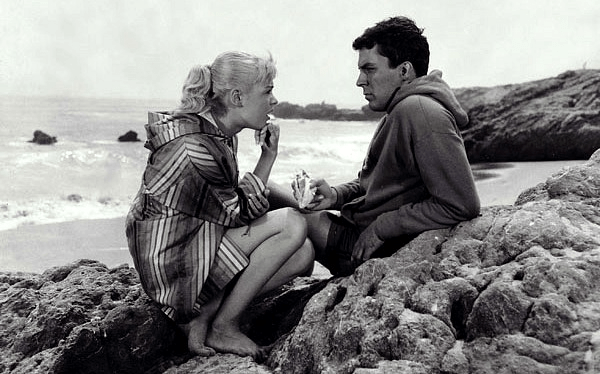
But was that the reality? Sort of, yes. The “real” Gidget was all American, in that she was born in America and grew up going to the beach. But her parents weren’t perfect traditional WASPs. They were Czech Jews who were working in the film industry in Berlin when they fled the Nazis to come to America and start working in Hollywood. They liked nature, they liked the outdoors, they liked interesting experiences, they were the ones who introduced her to the beach to begin with and they even sort of knew surfers already, used to let them hitch rides. Gidget started high school after spending a year in Berlin for her father’s work and felt all out of place back in California. So she started hiding out from the regular high school kids by going to the beach, where she followed around the small group of dedicated surfers until they let her try their boards. She was a cute tiny American high school girl who made friends with a bunch of kooky outcasts on the beach and fought her way into their surfing group, just like the movie says. She was also Jewish with two parents with thick accents, and felt out of place with the other high school kids because of that. Bonus, her uncle (who helped get the movie made) was one of the most powerful agents in Hollywood, married to a former top Mexican movie star. She grew up hanging out with her Catholic Mexican Jewish Czech cousins. Oh, and she had a bit of an in with the leader of the surfing community in Malibu because while his mother was born and raised in California, his father was a Hungarian émigré and good friend/acquaintance of her family.
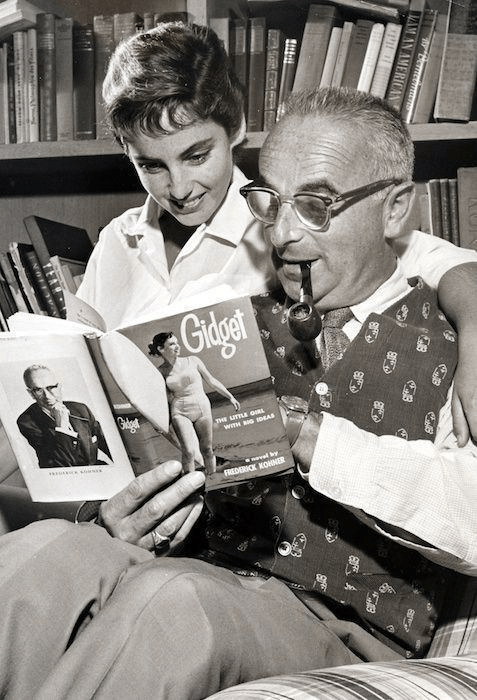
Certainly a young woman who grew up in California and discovered surfing COULD have been a nice blonde WASP with non-artistic non-immigrant parents. And the top surfer on the beach COULD have been another WASP type. So the movie version is possible. But the reality is also possible, that the two main people involved were part of the immigrant community and way outside what the movie presented.
Okay, now I am going to suddenly LEAP forward from 1950s American made movies, to 1950s set British made shows. When I watch my nice soothing period shows, I am more and more noticing multiple races showing up in little British villages of the 1950s. And you know what? I don’t mind it. Is it probable that Father Brown’s new housekeeper is a young woman with brown skin? Not necessarily. Is it possible? Absolutely! There were mixed race people in England, especially among the working classes, for hundreds of years. Not many, but they were there. So why not include that in your vision of history? Why try to erase it from the past just because it wasn’t common then? It’s common NOW and it is possible then, so just do it.
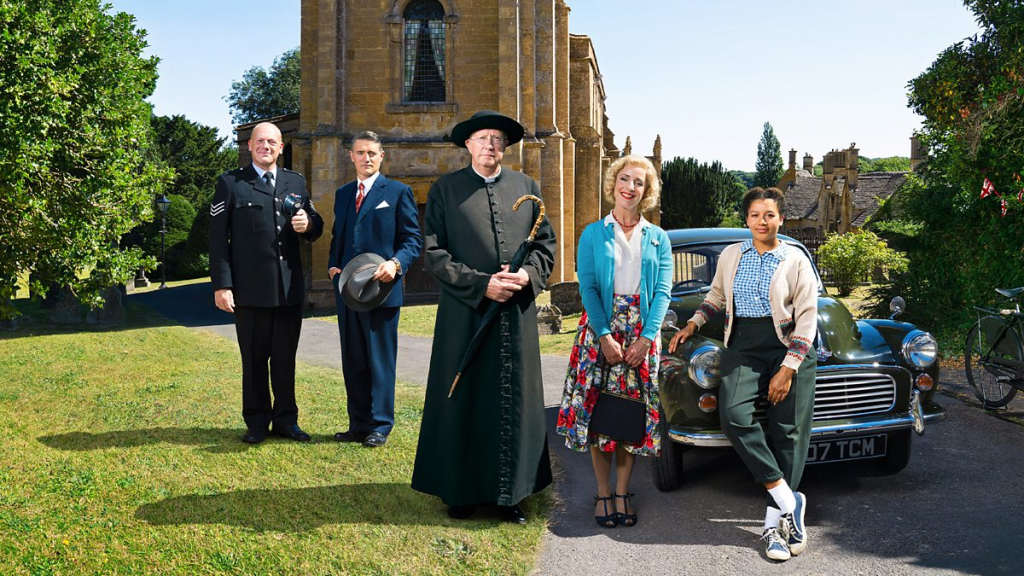
In a lot of these shows they don’t acknowledge the different races at all, which I am fine with. If it is possible that someone in that time period might have been in that position with that race, why make a big deal about it? Why not just have the characters accept it as a possibility without a lot of questions? I was really impressed by another show I saw recently, Vienna Blood, which had a slightly Asian looking character suddenly show up as a regular. The show is set around 1903 Vienna, and none of the characters had a huge reaction to this woman in a position of education and respect behaving, dressed, and speaking like any other European. I would have been happy if it had never been addressed, if it had been left as “yeah, people can look like lots of different things, this city is a melting pot, just go with it”. But I am also happy with what they chose to do, waiting all the way into the character’s second season on the show to have her briefly mention that her father served in the Boxer rebellion in China. Because, YEAH! There were middle-class officer/soldiers sent all over the world for hundreds of years, and some of them had children with locals and acknowledged those children. This isn’t something that was just invented with modern warfare.
Final example, I just watched Brahmachari (awesome movie FYI), and in the background of a lot of the party scenes, there were random white people. At first (as always) I assumed it was just Shashi’s family. But there were too many of them to be just Shashi’s group. And then it occurred to me, there were just a lot of white people in India in 1966! Just as there are now. Not “a lot a lot”, but definitely Possible.
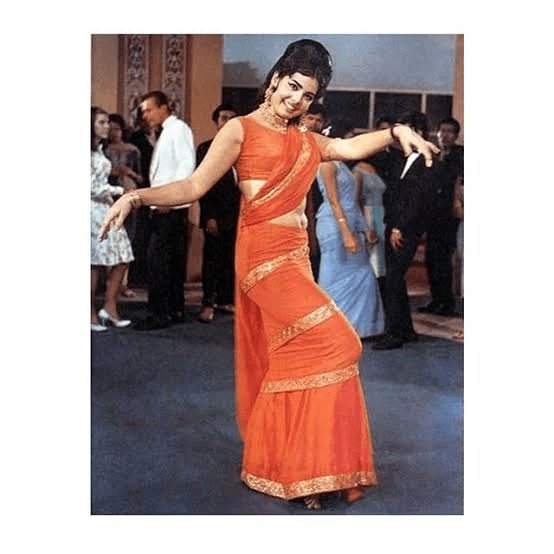
We think of the past as monochrome just because it isn’t as diverse as today may be. But that doesn’t mean it was all one color. The argument that color blind casting isn’t “historically accurate” doesn’t really hold water. If it’s possible, then show it. You don’t have to accept the white washing the past did of itself and repeat it when you show history.
Also, real life Gidget was AMAZING! She spent her high school years forcing her way into the surfing crew despite constant hazing, gave her Dad the idea for his most successful movie script ever, then went to college and joined a Jewish student group and got super in touch with her heritage, became a teacher, and married a professor of Yiddish. She still surfs and makes public appearances. I want to see that movie! Identity crisis of second generation American teen resulting in forging her own crazy path. It’s essentially Ms Marvel, but with surfing instead of being a superhero.

 dontcallitbollywood
A few links to toss in:
https://medievalpoc.tumblr.com/
https://www.courtneymilan.com/wedgeford-trials/
https://beverlyjenkins.net/
LikeLike
Also https://m.imdb.com/title/tt14829590/
LikeLike
I’m all for Race blind casting in certain situations where the story is mostly fantasy and the race doesn’t really matter even if its a certain time period. Like in Bridgerton where its in a completely fictional period.
However in certain books and series it just doesn’t work. For example I feel that if they remade the film ‘A room with a view’ today, it would definitely have more race blind casting. Yet the book is all about the superficiality of the English class system in the early 20th century and the way these social compulsions sort of restrict us. The book while fictional is in a very set time frame and even references historical events like colonisation etc. The effect is a bit lost as the book is history even though its fictional. Or even ‘The Age of Innocence’ is a similar example of what I mean.
While I don’t mind race blind casting, I do wish hollywood would invest in new stories about people of colour rather than just recasting them in old ones. There are numerous myths and stories around the world which hollywood could propel to a global platform; rather than remaking old stories and scripts.
LikeLiked by 1 person
I get what you mean. I think it’s a matter of flipping the conversation from “can this role be cast race blind?” to “is this a role that can NOT be cast race blind?” The default should be race blind, even in historicals. But you still have to allow for situations where the race does matter.
LikeLike
And now I’m pondering whether colorblind casting isn’t always better than writing in characters of color. I think a writer might just be more tempted to start with the justification for that character being there. You’d end up with more “chamber Turks” and the like.
Even the author of my darling Lady Hardcastle mysteries dedicates quite a few lines of Jagruti Bland’s first appearance on page to describing how her husband met her when he was working as a missionary. Though I do think her character is part of the same trend you’ve noticed with your British shows.
On the topic of Gidget, though: Does the film actually show her family going to church and stuff? Or how can you tell the protagonists aren’t Jewish?
LikeLike
What I like, and I’ve noticed a lot of shows doing, is they write the character and cast the actor, and then it’s usually not THAT complicated to slightly alter the character as needed based on the race/appearance of the actor. Just introduce them as they are, and then as layers unpack about the character, you can have them talk about their parents, their childhood, face prejudice, etc. Maybe colorblind casting just works better in TV shows for this reason? Every character in a TV show will evolve over episodes based on who is cast (someone who is good at comedy will be given more comic moments, etc. etc.), so you can introduce a character like the woman in Vienna Blood, and then 6 episodes later casually acknowledge her race in a way that is organic to the plot of that episode.
For Gidget white washing, they changed the name from “Kohner” to “Lawrence” and her parents went from immigrants with accents to non-accented people talking about growing up in America. I’m not sure if there was a specific Church reference, but I wouldn’t be surprised if there was, 1950s American movies really hit the Christian stuff hard. I could believe there was a quote from the New Testament stitched and hung on the wall or similar. That’s part of this I guess, the illusion was SO STRONG in pop culture in America for SO LONG, that we all kind of got brainwashed into thinking that everyone in America had last names like “Lawrence” and quoted the Bible and went to church. We need these re-writings of history to remind us that there had always been a melting pot.
LikeLike
Pingback: Thinky Post: Race Blind Historical Casting and Thinking About What May Not Be Probable, But is Possible (Also, Gidget) – News Hour 24/7
I love this post and the comments. I grew up a dark-haired, dark-eyed immigrant longing to be more Gidget-like. Luckily, I got over it, but all these years later, it’s nice to know the truth. Thanks, Margaret.
LikeLike
Exactly! The “All American Girl” was a child of immigrants all along.
LikeLike
Well, duh! Aren’t all Americans children of immigrants? Well, except for the few surviving native nations.
LikeLiked by 1 person
I should say, “child of first generation immigrants” 🙂 You are right, we are all decendents of immigrants!
LikeLike
Pingback: Thinky Post: Race Blind Historical Casting and Thinking About What May Not Be Probable, But is Possible (Also, Gidget) - Siyal News