I think this movie may not have been made for me. Because I don’t “get” sports, and I’m also neither a father nor a son. And yet, I enjoyed it! Even without the deep level of understanding I would have if I could better relate to the character emotions, I still liked it!
Let me see if I understand this. In the 60s, Tiger Khan takes over the Indian cricket team and builds it up to a professional merit based organized group. But, he doesn’t really win the big “things”. Then, in 1983, India’s Cricket team for the first time wins a big “thing”, against England, in England, and it is televised so everyone in India can participate and share in the victory. Yes? I’ve got it so far?
And then after all that comes Azhar and then Sachin, the amazing not just world-class but once in a lifetime best in the world kind of players. Yes? And it is good to be an Indian Cricket fan from the 90s through today. After a little dip in the early 2000s. Is this still correct? Oh, and then Shahrukh released Chak De India, and that got the World’s Cup back in 2011 (at least, that’s how it was reported in the sources I read!).
(1983 captain was kind of hot too! Are all Indian cricket players attractive? Is that just the rule?)
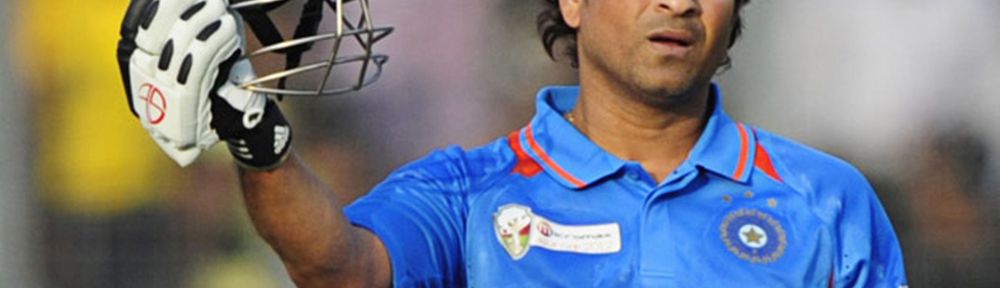
This movie opens with Sachin’s retirement speech, in which he calls back to 1983. And of course the title is 1983. I think what it is saying is not just that this was a memorable time in the hero’s life, or that it was an important moment in Indian cricket, but that it was a moment that grabbed hold of the hero and forever altered him, body and soul. That it changed a whole generation of Indians and Sachin is just the one who became famous.
When I say “changed”, I think they are talking about changed on like a genetic molecular level. Because it is a change that carried down into the next generation and the next and the next. And it’s more than just discovering a new hobby or something like that, it is a complete inescapable obsession. Nivin was interested in his father’s work, he did well in school, he was on track to be an engineer. And then 1983 happened, and all of a sudden he was a different person. And so was his son. And it is something that the older generation just couldn’t possibly grasp, because they didn’t live through it
Okay, stick with me through this, but it kind of reminded me of Tarzan. Not Tarzan the cartoon movie version (or Taarzan: The Wonder Car), but the original book series. Which I love. In the books, there’s Tarzan, right? Raised by apes, has phenomenal reflexes and muscles and instincts, and so on and so forth. This all makes sense based on his upbringing. But then in the sequels there is Son of Tarzan. Raised in London and fancy boarding schools, never even been to the jungle. And yet he is amazingly strong and quick and all this stuff, and he has a deep longing for Africa. So, on the one hand, we have a character being built and developed by what he experienced, and on the other hand, we have a character being built by what his father experienced, which somehow was so strong that it passed down to him in his blood.

(This is the copy I own. Classy, right?)
That’s I think what is going on here. Nivin is part of this generation that was forever changed by 1983, and it changed him so fundamentally, that he passed it down to his child. But it can only go down in the generations, not up, so he had no way of conveying it to his father.
Nivin’s connection with Cricket felt almost mystical. When the Indian team was up, so was he. And when it went down, so did he. I think that might be the other point of this, that the Indian Cricket team is successful not just because of the 11 (11? right?) men on the team, but because of how it has a connection to India, how all those boys giving up their youth playing local field cricket, all those desperate fans living and dying as they watch the matches on TV, somehow gives power to the players on the field. How Nivin’s failure at tests, at business, at everything, isn’t just a failure, but a sacrifice at the alter of sport.
That sacrifice, of course, becomes more literal in the second half, when it is rewarded with a son who has the same drive and talent as him, but to whom he can give all the opportunities that were denied to him, denied by his father but also by the times he was living in. 1983 changed his generation forever, but they had to wait until they came of age to change the world, and make it more cricket-friendly, create those opportunities that they never had.
I think that’s what’s happening in a conversation late in the film when a slightly younger coach starts disparaging Sachin, because he is slowing down, because he doesn’t have the perfect technique. An older coach, who remembers 1983, chastises him, reminds him that even without the technical training, Sachin is still the best there ever was, and who is he to criticize? Basically, it is the old “you gotta have heart!” argument of sports. It doesn’t matter if you train or have a great technique or anything else, if you don’t have that certain extra something.
(Why hasn’t India remade Damn Yankees yet with a Cricket team instead? It would be so perfect, you could even have one of the Khan’s play the older hero, and one of the young kids play the younger hero)
That’s the other argument, that Nivin and his generation had a certain special relationship to Cricket, a kind of obsession and connection that no one else will ever have, today the coaching classes and the equipment and everything else have somehow sullied the beauty of their spirit. Except for Nivin’s kid, who is carrying the hopes and dreams of not just his father, but his father’s whole village Cricket team, the group that was bonded closer than family through their shared experiences, this kid still knows what it is to purely enjoy the game.
Also, this kid is SO CUTE!!! Oh my gosh, the whole second half I was just frozen up, worried something bad would happen to him. But nothing did. Thank goodness. Probably because his Dad had enough bad stuff happen to him for the both of them.
Poor Nivin! In his voice over at the beginning, he talks about how his timing never seemed to be right, except on the Cricket field. And that’s really his curse. First, that he is born at the wrong time, too early for his Cricket talent to be developed, but too late to avoid Cricket fever entirely. And then that he is too slow to figure out how to reconcile the multiple parts of his life, as a son, as a husband, as a father, as a worker, and as a Cricket player and fan.
That’s why, I think, it takes 30 years for the film to finish. That, and the mythical Sachin connection. Nivin had to wait and struggle for decades before everything just sort of clicked into place for him, and suddenly it was the right time for his life. And part of that was finally giving up on, I don’t want to say his dreams exactly, but his goals. Or maybe finally finding a goal? Figuring out that his whole life had been building him to this one moment, to being the champion and support for his son’s dreams, not his own. Just as Sachin stepped back from his own goals and dreams and decided it was time to let the next generation shine.
It’s that step back that Nivin’s father can never quite manage. Not that Nivin makes it easy on him, being such an extremely disappointing son. They start out well, Nivin’s Dad is tutoring him, teaching him the family business and hoping he will have the training and opportunities that his father never got, just like Nivin will do ultimately with his son. But while Nivin lets his son take the lead, waited for him to express interest and joy in what he was doing, and was ready to back off and forget about it if his son didn’t want to continue (after that first failed try out, Nivin was supportive and encouraging, but it was his son he said he wanted to keep trying and training), but Nivin’s father was never able to handle the sudden shift in his son’s interests that came about after 1983.
Nivin, in the end, is able to combine his passion for Cricket with the engineering and practical skills taught by his father. It’s a wonderful moment when the whole family comes together with shared interests, but it is also a moment that, possibly, could have happened 30 years earlier. What if Nivin’s father had been able to understand his son’s passion, not to the degree of sending him to a Cricket coaching class, but at least to be able to help him balance his interests? What if they had found a shared project before this that was both Cricket and engineering? Or if he had lowered his expectations, let his son enjoy his time on the village Cricket team and working in the family machine shop, instead of trying to throw a pre-college course on top of it? His father had a vision of a son that Nivin could just never live up to, and the solution was not for Nivin to change, but for his father to change how he saw him. Maybe Nivin could never be an engineer, but he kept the family business going, and he was a hero to his Cricket mates, and his father could have chosen to be proud of that all along, instead of disappointed with what he didn’t get.
Which is what Nivin’s wife learned to do, to accept him for who he is. I love their relationship in this movie. I was nervous at first, because he already had his big love affair. And the way their marriage was handled, it was definitely a “settling” decision. They could have turned it into a big romance after all, as he learns to love his wife and forget his sweetheart, like they do in most movies post-marriage, but that would have undercut the message they wanted with his son, that this was the first person in his life who really “got” him and appreciated him.
(They never even got their own song, like Nazriya and Fahad finally did in Bangalore Days)
Nivin’s wife doesn’t really understand him, or worship him, or fall passionately in love with him. But she really knows him, and likes him and loves him (in her own way) for what he is. She knows he is afraid of his father, and bad with money, and a little lazy, and a little Cricket obsessed. And he knows she is a little slow and a little unimaginative and can never really understand his Cricket fever. But, their teasing never feels bitter or mean-spirited. He kind of enjoys laughing at her and she kind of enjoys laughing at him. And, when it gets down to it, they are partners. She helps him hide from his parents, he never makes fun of her to his son or his parents, and there is a basic level of acceptance and comfort with their life together. After their marriage, there are no moments of bitterness or regret about what they could have had, they are both making the best of what they got.
This movie is such a father-son piece, and such a male bonding piece (with Nivin’s loyalty towards and relationship with his village Cricket team being the center of his life), but it didn’t feel like the female characters were demonized. Nivin’s mother and wife and girlfriend couldn’t really understand his passion, but that wasn’t a huge fault or sin, it was just how they were. It didn’t even feel like it was limited to female characters, there was a general divide between those “got” Cricket, and those who didn’t.
The only time not “getting” Cricket was a real flaw, was when someone pretended to get it and really didn’t. Which, for me personally, was great because as I said, I don’t “get” Cricket, but I also don’t pretend to “get” it, so according to this film, I’m not that bad!
The only villain of the film was the topflight coach, the one who initially rejected Nivin’s cute cute cute son, because he could only see skill and ability not “heart”. I kind of didn’t get why he was supposed to be so evil when we first saw him, because he did give the kid a try out, and the kid couldn’t hack it. But then it clicked for me in the second scene, when he was criticizing Sachin and the “good” coach got furious and talked about how he didn’t really understand cricket, he just saw the technique.
That’s what made the “good” coach so good, that he wanted to pass on the joy and dream of cricket to the kids he trained, that he really cared about them enjoying themselves and understanding why the game was so wonderful, and that he could see that spark in Nivin and in his son, which made the two of them closer to Sachin and the real spirit of Cricket than the “bad” coach and the rich kids, with all their training and equipment, could ever be.
 dontcallitbollywood
Poor Nivin! His reaction when his wife mistakenly called Sachin a Bollywood actor was priceless.The theme that you can’t escape your destiny and will turn out exactly like your father is a common theme of many Indian movies.Aurangzeb starts with this quote which says it all “‘Deep in the cavern of the infant’s breast; the father’s nature lurks, and lives anew.
Finally! Someone else who loves Korak.I didn’t like the other Tarzen books by Edgar Rice Burroughs.Did you like the 2012 movie about John Carter? Taylor Kitsch was good but the story was so weird.Speaking about Taylor whom I loved as Gambit in X-Men Origins: Wolverine,what’s it that I hear about Channing Tatum playing Gambit in a spin-off? No way.Channing Tatum gives me Uday Chopra vibes.
LikeLike
How was Aurangzeb? I wanted to watch it, and then I missed the window when it was in theaters, and never really got interested enough to check it out on DVD or streaming.
Yay! Another Tarzan novel reader! You know, Burroughs was from Chicago? Like me! Which explains how incredibly inaccurate his vision of Africa is, since it’s just what he imagined while sitting in some high rise apartment watching the snow fall. And also why I like the books so much, because they are perfect for me to read while I sit in my apartment and huddle by the radiator and watch the snow fall.
I didn’t see the John Carter movie, but I saw the trailer about a million times, because it came out while I was working at a movie theater. Such an odd promotion campaign! It was like for a Superman movie or something, like we would all be excited just because we recognized the character. Only, no one had heard of the character because he hadn’t been popular for about 60 years!
You bite your tongue about Channing Tatum! I love him! Ever since She’s the Man (the movie Dil Bole Hadippa is based on). Plus, he gives me a definite Indian movie star vibe, what with the dancing and the early marriage and the willingness to make fun of himself and be in silly roles. Uday Chopra, on the other hand, looks like a frog. Which is why I was thrilled when he was dating Nargis, because she looks like a duck, so it was as though the two amphibians had found each other.
LikeLiked by 1 person
It’s a good thing then that Uday and Nargis didn’t marry and have any kids 🙂 I know Channing Tatum mostly from the 21 Jump Street series.Have to check out ‘She’s the man’ since it’s based on Twelfth Night my favorite Shakespeare comedy.
Watch the John Carter movie only for Taylor Kitsch and the special effects.The plot would make anyone who loved the books weep at the travesty done.Edgar Rice Burroughs wrote some 20 plus Tarzen novels without setting foot in Africa? Wow! That’s some imagination. I didn’t know he was from Chicago.But IIRC the Mucker had a Chicago background.And speaking about Chicago how can I separate the city from Harry Dresden.Both of them are linked together irreparably in my brain.
You should definitely put Aurangzeb in your queue.It should have been a TV series because it has so many things crammed into a 2 hr movie.It’s mostly about fathers and sons and whether you can escape your genetics.Which will win, nature or nurture? There’s Prithviraj who resents his father Anupam Kher and idolizes his uncle Rishi Kapoor, a corrupt cop.They belong to a family of cops.Then there’s the mob family- Jacky Shroff and his twin sons(Arjun Kapoor).The matriarchs played by Amritha Singh and Deepti Naval are as ruthless as their counterparts.Their two worlds meet when Arjun Kapoor the good twin is sent to impersonate the wild twin on a sting operation.For the first time in Hindi cinema, the twins are shown having sibling rivalry and competition.And both of them are attracted to the same woman.The movie owes its title to Rishi Kapoor who often quotes the tale of Mughal Emperor Aurangzeb who murdered his brother Dara for the throne.Kingship knows no kinship.
For more quotes from the movie check out http://www.filmyquotes.com/movies/446
LikeLike
Oh, if you haven’t seen Channing Tatum in She’s the Man, you haven’t LIVED! It’s very much a standard hunk kind of role, but he gives a delightful twist and sense of humor to it. Kind of like Shahrukh in Deewana adding his little spice to the standard “young hero” part. Plus, the Twelfth Night references are much more explicit than they are in Dil Bole Haddippa, you can almost play “spot the quote!”
You have beaten my Edgar Rice Burroughs knowledge! I just read the first dozen or so Tarzan books, and never really got into anything else. This is the first I heard of the “Mucker” series, and now I am fascinated! Especially because, wikipedia tells me, the last book is set in “Oakdale” which is clearly based on “Oak Park”, the suburb where Burroughs was born. Although it looks like even with the Chicago setting, he was still using his imagination quite a bit, since he was solidly upper middle class out in the suburbs, and he made his hero a rough street kid.
I didn’t know the Dresden Files was a book series! I only vaguely knew about the failed TV series (starring Lagaan’s villain!) from a few years back. I may have to check it out. Along with Aurangzeb.
LikeLike
Pingback: My Movie To-Do List: Let Me Know If I Missed Something! And Click the Links to See What I Have Already Covered! | dontcallitbollywood
In 1983 unexpectedly India won cricket world cup first time in the history That was a turing point in Indian cricket
LikeLike
i don’t get cricket either but this was an enjoyable sweet movie. Usually sports movies are not my thing but it was worth a watch.
LikeLike
Yeah, it was a sport movie, but it didn’t feel “sporty”. Like, they needed something to be his coming of age experience and a common thread, and it could have been needlepoint or woodworking or anything else. The point wasn’t so much the details of the game and the sport, but more what affect it had on the character.
LikeLike
There I will differ with you. Because I think Nivin was a stand in for many in India who were swept up in cricket fever. Yes, he is a specific person who doesn’t do much else well except hit the cricket ball for “sixers” and be a good father. But I think the movie was really about how winning in 1983 changed India and their ideas of what was possible. At least that’s what I got from it.
LikeLike
Pingback: Maheshinte Prathikaaram: Sometimes You Just Need to Be Hit Over the Head | dontcallitbollywood
Pingback: Links! To Articles With Random Filmi Related Content! | dontcallitbollywood
Pingback: News Round-Up: Salman as a Father, Ranveer as a Cricketer, Abhishek as a Flake | dontcallitbollywood
Pingback: Film Reviews | dontcallitbollywood