
I put up this post originally on the anniversary of his first act of rebellion, but it didn’t get many views, so I am putting it up again on the anniversary of his birth. Because Mangal Panday is important! And so is 1857. And we should remember both of them.
In 1857, most of what is now modern India was ruled by the British thanks to a loose collection of treaties and straight up conquering. And the British rule was enforced primarily by local soldiers, not British troops, 300,000 locals to 50,000 Europeans. The British East India Company recruited locals and trained them and armed them and uniformed them in British style.
At the time, “India” as it is today did not exist. Soldiers were used to being paid to work for neighboring states, or their local king to whom they had little loyalty. Fighting for the British wasn’t necessarily disloyal, because it wasn’t clear what you would be loyal TO if you weren’t fighting for the British. Not for everybody of course, but depending on what region of the country you were living in, you may not have really had a “national” identity as anything in particular.
(Remember Bajirao? His Maratha Empire took control of Uttar Pradesh and ruled it from Pune starting in the 1780s. And that was after it had been ruled by the Mughals from Delhi since the 1400s. I doubt it made much difference to the locals on the ground when the British took it from the Marathas in 1803. Just one distant ruler for another, and one army to pay you instead of another)
But the British themselves helped to create that identity through their army. Maybe you didn’t have an idea of being “Indian” before joining the army, but when the troops were divided into “native” and “European”, you started to realize that you had more in common with your fellow “natives” than you might have thought, and that all of you really were beginning to hate the “Europeans”.
By the 1850s, there were increasing complaints from the “native” troops over how they were treated. They were paid less, they were given worse food, they were restricted in what areas they could access, and of course they were being forced to punish and kill civilians who looked like them who were complaining about similar issues. And as the British East India Company continued to expand it’s power, the soldiers were being sent further and further away from their homes, and seeing more and more abuses of power happening all around them.
(Only British officers allowed into the fancy clubs to enjoy the dancing girls, no regular soldiers allowed)
The simple explanation usually given for the “mutiny” is that the British expected the soldiers to use a new kind of gun, the Enfield rifle, which would require them to bite down on a cartridge coated in pig and beef fat, offending both Muslim and Hindu sentiment. This is true, to some extent, but it was really just a final sign of a long series of indignities telling the “native” soldier that he had no value for his European overlord.
The final spark that set off all this kindling of rebellion was a sepoy named Mangal Panday. He had never been particularly noticed before in any way, but he showed up on the parade grounds one day, “frenzied” according to official reports, ranting against the British. He took a wild shot at an officer, and was ordered to be arrested. The quarter guard refused to arrest him. Mangal Panday then attempted to shoot himself, but only managed to wound himself. He, and the quarter guard, were both court-martialed and hung. And perhaps even more damaging, their entire regiment was striped of status and disbanded. The lesson being, “take note ‘native’ soldiers, the security and respect that attracted you to British army service is illusionary, so maybe revolt isn’t a bad idea”.
There were a series of mysterious fires, fomenting of rebellions, and so on through out April. And then on the 24th of April, 85 men refused orders to use the new cartridges and were sentenced to imprisonment and hard labor. The British officers were warned that failure to pardon the prisoners could result in rioting, they ignored it, and riots ensued. British officers and their families were killed, as were the “native” servants who tried to help or hide them. The prisoners were freed and marched with their comrades to Delhi to call on the last remaining king of the Mughal Empire to lead them. After some prevaricating, he agreed.
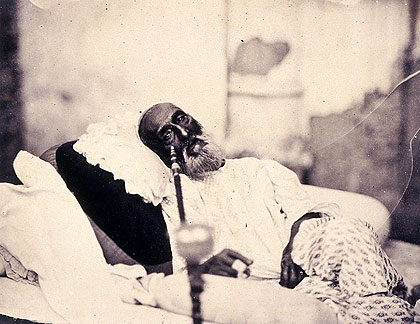
(Photo of the last Mughal shortly before he was sent into exile after all of this was over. The British shot his sons and grandson and then presented him with their severed heads as punishment for his rebellion)
And then all of India caught fire. It varied in details place to place, in some areas the British authorities simply fled, leaving everything to the rebels. In others, they tried to preemptively enforce order, and ended up just inciting riots more quickly. In some places the rebels treated the defeated British with respect, in (sadly too many) other places, the British soldiers, civilians, women and children were all killed.
1857 is a tricky one to handle. On the macro-level, the British were clearly in the wrong. They had taken over a land and a people through trickery and force, and were committing daily minor atrocities. On the micro level, battle by battle and siege by siege, the British were often in the wrong as well. Whole villages burned and the residents hanged by the side of the road, terrible things. But then, it also cannot be ignored that the rebels did terrible unconscionable horrific things as well. The most famous being the massacre at Kanpur, 206 women and children prisoners hacked to death and their bodies thrown in a well for reasons that are unclear to this day.
It is the lack of “reason” that is perhaps the true flaw in the 1857 revolution, why it failed in the end and why it is still considered a bloody ugly part of Indian history. The original “mutiny” by the Sepoys, that had logic too it. They wanted to free prisoners, to march on Delhi and restore Mughal rule, to win certain battles. But there was no clear goal beyond that, no leader appeared to take charge. Instead of the trained and skilled soldiers, the ones who had felt the need for the rebellion in the first place, leading the charge, power was handed over to a variety of traditional local rulers of varying levels of skill and experience. Going back to Kanpur, there were in fact two “massacres”. The first was during the original British retreat. There was a stray shot, the British fired back, the mutineers attacked, won, and took prisoners. Women and children were caught in the crossfire and it occurred during what was supposed to be a peaceful retreat, thus the “massacre” description, but it was ended swiftly and decisively and the survivors taken prisoner, there was a control there and a logic. The later massacre was of those prisoners, and it was not carried out by the former East India company soldiers. In fact, they refused to take part in it to a man, the local Raja had to recruit two local butchers, a couple peasants, and one of his bodyguards to oversee it. The massacre, besides being an act of evil, was also very stupid. “Kanpur” turned into a rallying cry encouraging British support back home and excusing brutal acts of vengeance by the British troops. If the Raja had listened to the mutineers, or even better turned over control of the town directly to them, this story could have had a happier ending and perhaps the British rule of India would have ended 90 years sooner.
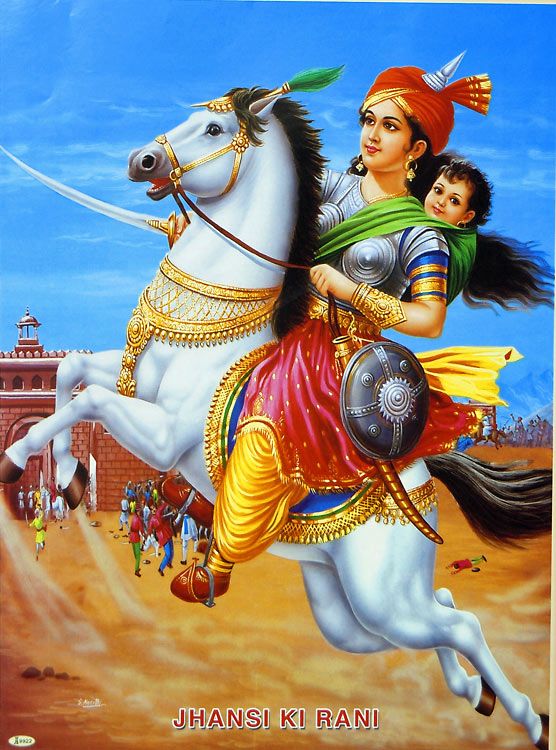
(For an instance of a good ruler who was not listened to, there is Rani Lakshmibai, the Rani of Jhansi, who fortified her town against the mutineers, and when the British arrived to “rescue” her, declared “We fight for independence. In the words of Lord Krishna, we will if we are victorious, enjoy the fruits of victory, if defeated and killed on the field of battle, we shall surely earn eternal glory and salvation”. Jhansi fell eventually, Lakshmibai fled with her infant son strapped to her back, and died in battle after her advice to other Indian war leaders was ignored and the British overran a neighboring fort where she was hiding)
1857 is full of heroic stories, and stories of great evil. But they are distributed on both sides. Even among the “natives”, there are stories of loyal soldiers and servants who risked their lives for their British friends, and there are also stories of locals who risked their lives to protect their friends and neighbors from British atrocities. There are stories of “Indian” against “Indian”, the Sikhs and Pathans in the north joined with the British and had a major role in ending the rebellion. Truly this was less a “rebellion” or a “revolution” or a “mutiny”, and more a Civil War. Brother against Brother, community against community, all the messiness and anger and confusion that cannot help but happen when a people and a land are divided by anger.
(The old building they are dancing in is the ruins of the Lucknow Residency where thousands of British and “native” combatants and noncombatants were trapped for 6 months by mutineers. You can see the powder stains and bullet holes in the walls behind Parineeti and Aditya. The siege ended with the arrival of Sikh troops who overran the mutineers and freed those trapped inside. To put it simply, “brown” skin was present on both sides of this battle, as it was in most battles of 1857)
But let us go back for a moment to Mangal Panday. He was born into a Brahmin family in what is now Uttar Pradesh, at a time when the British were already rulers of that territory. At age 22, he joined the army. The British East India Company tended to recruit heavily from similar castes and regions, Mangal Panday was part of the Bengal troops, who were primarily Brahmin. The Bengal Brahmin’s were particularly unhappy with the British in 1857 thanks to the recent attack on Oudh, a Bengal princely state, which they had been forced to take part in capturing.
There were two Bengal regiments that were stationed close to each other and both unhappy at this time, Panday’s 34th and the 19th. The 19th had been charged with testing the new Enfield rifles, the ones rumored to use animal grease on their cartridges. They had refused, and even gone so far as to seize the weapons store before being talked around by their commander.
Both regiments also included fervent Christians among their European leaders, ones who were vocal and obvious in their attempts at conversion. It all lead to a general sense of disrespect towards the “native” troops, and resentment in return.
On the morning of March 29th, Mangal Panday was drunk on alcohol and Bhaang (as he said at his trial). He went on the parade grounds and declared that he would shoot the first European to approach him. And he did, a wild shot that hit the officer’s horse. He continued to threaten and rave, and the rest of the regiment stood by and watched, refusing to contain him. He was finally brought down after attempting to shoot himself.
The importance of Mangal Panday isn’t in that first action, or at least not only in that first action, it is what happened afterward. At the trial, he refused to claim involvement of any other member of the regiment, said he went out there on his own because of his own decisions. He stood by the men who had stood by him on the parade ground, watching and refusing to stop him. And the British saw it too, saw that this was not about one man, this was about one man who was loyal to a hundred men, and a hundred men who were loyal to him. They punished the whole regiment equally.
And thus India was born. From “native” soldiers, trained by and loyal to their British officers, concerned with their particular regional and ethnic and religious issues, they became “Indian”, loyal to each other above all else, above religion and language and caste. You can see it from this list, before the mutiny there were 74 separate regiments, located all over India. After the mutiny, there were 12. Because 62 separate and diverse groups of men had chosen to join together in rebellion. That is what Mangal Panday did.
| Pre-1857 list of Bengal Native Infantry Regiments | |
|---|---|
| Pre-1857 full regiment title.[2] | Status after the Mutiny.[2][3] |
| 1st Regiment of Bengal Native Infantry | Mutinied at Cawnpore |
| 2nd (Grenadiers) Regiment of Bengal Native Infantry | Disarmed at Barrackpore |
| 3rd Regiment of Bengal Native Infantry | Mutinied at Phillour – loyal portion joined The Loyal Purbiah Regiment |
| 4th Regiment of Bengal Native Infantry | Disarmed at Kangra and Noorpore |
| 5th Regiment of Bengal Native Infantry | Mutinied at Umballah |
| 6th Regiment of Bengal Native Infantry | Mutinied at Allahabad and Futtehpore |
| 7th Regiment of Bengal Native Infantry | Mutinied at Dinapore |
| 8th Regiment of Bengal Native Infantry | Mutinied at Dinapore |
| 9th Regiment of Bengal Native Infantry | Mutinied at Allygurh, Boolunshuhur, Etawah and Mynpoorie |
| 10th Regiment of Bengal Native Infantry | Mutinied at Futtehgurh |
| 11th Regiment of Bengal Native Infantry | Mutinied at Meerut |
| 12th Regiment of Bengal Native Infantry | Mutinied at Jhansi and Nowgong |
| 13th Regiment of Bengal Native Infantry | Mutinied at Lucknow |
| 14th Regiment of Bengal Native Infantry | Mutinied at Jhelum |
| 15th Regiment of Bengal Native Infantry | Mutinied at Nusseerabad |
| 16th (Grenadiers) Regiment of Bengal Native Infantry | Disarmed at Goojerat and Lahore |
| 17th Regiment of Bengal Native Infantry | Mutinied at Azimghur |
| 18th Regiment of Bengal Native Infantry | Mutinied at Bareilly |
| 19th Regiment of Bengal Native Infantry | Disbanded at Barrackpore |
| 20th Regiment of Bengal Native Infantry | Mutinied at Meerut |
| 21st Regiment of Bengal Native Infantry | Did not mutiny – became 1st Bengal Native Infantry |
| 22nd Regiment of Bengal Native Infantry | Mutinied at Fyzabad and Oude |
| 23rd Regiment of Bengal Native Infantry | Mutinied at Mhow |
| 24th Regiment of Bengal Native Infantry | Disarmed at Peshawur |
| 25th Regiment of Bengal Native Infantry (Volunteers) | Disarmed at Benares |
| 26th Regiment of Bengal Native (Light) Infantry | Mutinied at Lahore |
| 27th Regiment of Bengal Native Infantry | Disarmed at Peshawur |
| 28th Regiment of Bengal Native Infantry | Mutinied at Shahjehanpore |
| 29th Regiment of Bengal Native Infantry | Mutinied at Moradabad |
| 30th Regiment of Bengal Native Infantry | Mutinied at Ajmer, Jeypore and Nusseerabad |
| 31st Regiment of Bengal Native (Light) Infantry | Did not mutiny – became 2nd Bengal Native Light Infantry |
| 32nd Regiment of Bengal Native Infantry | Mutinied at Deogurh – loyal portion became 3rd Bengal Native Infantry |
| 33rd Regiment of Bengal Native Infantry | Disarmed at Phillour[10] – loyal portion became 4th Bengal Native Infantry |
| 34th Regiment of Bengal Native Infantry | Disbanded at Barrackpore |
| 35th Regiment of Bengal Native (Light) Infantry | Disarmed at Phillour[10] |
| 36th Regiment of Bengal Native Infantry (Bengal Volunteers) | Mutinied at Jullundur – loyal portion joined The Loyal Purbiah Regiment |
| 37th Regiment of Bengal Native Infantry (Bengal Volunteers) | Mutinied at Benares |
| 38th Regiment of Bengal Native Light Infantry (Bengal Volunteers) | Mutinied at Delhi |
| 39th Regiment of Bengal Native Infantry (Bengal Volunteers) | Disarmed at Dera Ishmael Khan |
| 40th Regiment of Bengal Native Infantry (Volunteers) | Mutinied at Dinapore |
| 41st Regiment of Bengal Native Infantry | Mutinied at Seetapore |
| 42nd Regiment of Bengal Native (Light) Infantry | Mutinied at Saugor – loyal portion formed 5th Bengal Native (Light) Infantry |
| 43rd Regiment of Bengal Native (Light) Infantry | Disarmed at Barrackpore – loyal portion formed 6th Bengal Native (Light) Infantry |
| 44th Regiment of Bengal Native Infantry | Disarmed and dispersed at Agra and Muttra |
| 45th Regiment of Bengal Native Infantry | Mutinied at Ferozepore |
| 46th Regiment of Bengal Native Infantry | Mutinied at Sealkote |
| 47th Regiment of Bengal Native Infantry (Volunteers) | Disarmed at Mirzapore – loyal portion formed the 7th Bengal Native Infantry |
| 48th Regiment of Bengal Native Infantry | Mutinied at Lucknow |
| 49th Regiment of Bengal Native Infantry | Disarmed at Lahore |
| 50th Regiment of Bengal Native Infantry | Mutinied at Nagode |
| 51st Regiment of Bengal Native Infantry | Mutinied at Peshawur |
| 52nd Regiment of Bengal Native Infantry | Mutinied at Jubbulpore |
| 53rd Regiment of Bengal Native Infantry | Mutinied at Cawnpore and Oorie |
| 54th Regiment of Bengal Native Infantry | Mutinied at Delhi |
| 55th Regiment of Bengal Native Infantry | Mutinied at Nowshera |
| 56th Regiment of Bengal Native Infantry | Mutinied at Banda and Cawnpore |
| 57th Regiment of Bengal Native Infantry | Mutinied at Ferozepore |
| 58th Regiment of Bengal Native Infantry | Disarmed at Rawul Pindee |
| 59th Regiment of Bengal Native Infantry | Disarmed at Umritsur – loyal portion formed 8th Bengal Native Infantry |
| 60th Regiment of Bengal Native Infantry | Mutinied at Rohtuck |
| 61st Regiment of Bengal Native Infantry | Mutinied at Jullundur – loyal portion joined The Loyal Purbiah Regiment |
| 62nd Regiment of Bengal Native Infantry | Mutinied at Mooltan |
| 63rd Regiment of Bengal Native Infantry | Disarmed at Berhampore – loyal portion formed 9th Bengal Native Infantry |
| 64th Regiment of Bengal Native Infantry | Disarmed at Barrah, Fort Mackeson and Peshawur |
| 65th Regiment of Bengal Native Infantry (Volunteers) | Disarmed at Ghazeepore – loyal portion formed 10th Bengal Native Infantry |
| 66th (Goorkha) Regiment of Bengal Native Infantry | Did not mutiny – became 1st Goorkha Regiment |
| 67th Regiment of Bengal Native Infantry (Volunteers) | Disarmed and dispersed at Agra and Muttra |
| 68th Regiment of Bengal Native Infantry (Volunteers) | Mutinied at Bareilly |
| 69th Regiment of Bengal Native Infantry | Disarmed at Mooltan |
| 70th Regiment of Bengal Native Infantry | Disarmed at Barrackpore – loyal portion formed 11th Bengal Native Infantry |
| 71st Regiment of Bengal Native Infantry | Mutinied at Lucknow |
| 72nd Regiment of Bengal Native Infantry | Mutinied at Neemuch |
| 73rd Regiment of Bengal Native Infantry | Mutinied at Dacca |
| 74th Regiment of Bengal Native Infantry | Mutinied at Delhi |
 dontcallitbollywood