
Remember the two #MeToo rules on DCIB: If you are going to repeat a story about someone, you must link back to the original source so we can all read it and judge for ourselves. And if possible, try to make the discussion broader and productive instead of personal. I’m going to try to follow both those rules myself with the Hirani story, giving a link back to the original source here, and talking about the broader issue I see what what happened.
What strikes me about this particular story is how the industry being connected informally but not legally really causes an issue in these cases. The survivor was working for Hirani, was assaulted by him, but kept quiet for 6 months while she completed her job. Not because she feared quitting that particular job, but because she knew Hirani could bad mouth her through out the industry and make sure she was never hired again.
Technically she was an employee of Hirani’s own independent company, tiny little Rajkumar Hirani Films. Losing that job would be meaningless, a small job with no future at a small company. But in reality, Rajkumar Hirani Films isn’t really independent. Because the Hindi film industry is so interwoven on a personal level that losing one job from a small company means you are really losing a job from the whole informally interwoven industry of multiple small companies and multiple producers who talk to each other and socialize together and hand off employees one to the other with a personal recommendation.
But because on paper she was only working for Hirani, that also meant she had no formal place to go with her complaint. There was no committee to appeal to, no one over his head she could talk to, just Hirani himself and his small company with contract employees project by project. It is the worst of both worlds for the employee, all the power to end your career of working for a large company, but none of the benefits of a larger formal corporate structure.
And so she could only respond through those same informal routes that Hirani would have used to punish her. She made her complaint and told her story to Anupama and Vidhu Vinod Chopra and the screenwriter Abhijat Joshi. None of these people have any legal or formal relationship to her workplace.
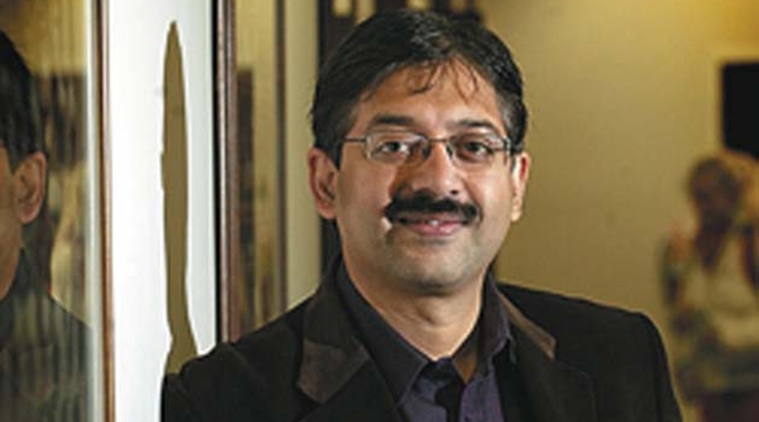
Abhijat Joshi. He teaches at a small school in Ohio, which is interesting, and makes me wonder how that might have affected his response to this story, being so far removed from the Bombay world.
Vidhu Vinod Chopra is the producer who discovered Rajkumar Hirani and sponsored him the industry and partners with him through his company on all his pictures. Anupama is Vidhu’s wife and an influential figure in the industry, and occasionally listed as a co-producer on his films. Abhijat Joshi is a screenwriter who has always worked closely with Hirani. By going to them with her story, the survivor was both finding allies and asking them to face their personal culpability for what happened.
The silver lining I find in this story is that they all did, in fact, accept personal responsibility. Even though there is no legal threat that could ever affect them. The Chopras believed her and had her stay in their home with them, and gave her the number of a professional to help her with whatever she needed. And yes, I know this because Anupuma gave a statement to The Huffington Post saying they did this, so it is a bit of a PR move. But I don’t think you can have someone stay in your home for two days just because of PR.
Most of all, Hirani is a money-spinner. If we look at the other big names so far, Sajid Khan and Vikas Bahl and Alok Nath, they are all successful, but uneven. Hirani from a purely financial angle is the most profitable man in the industry. For the Chopras to cut him off from them, publicly and therefore permanently, is turning their back on millions and millions of dollars. Any advantage of good PR, from a financial side, saving Anupama’s Film Companion website and so on, will never make up for the money they are losing by cutting loose Hirani.
So, it’s an odd situation. Hirani implicitly threatened her with punishment from the entire industry if she spoke up. But instead, she received the support of the industry, including those people closest to Hirani. I don’t know if it would have happened that way in a different time, or if she had moved forward in a different way (for instance, given the story to Huff Post before speaking with the Chopras or after instead of simultaneously). But the reality of what we are looking at here is that Hirani, the most successful and profitable director in the history of Hindi film, is being cut loose by those who are closest to him and profited the most from him, based on the account of one survivor. That’s kind of remarkable.
But, on the other hand, if Rajkumar Hirani Films had officially legally been a subsection of Vidhu Vinod Chopra Films instead of unofficially, then she would have had a complaint committee to speak with and some sense that she had options before now. Instead of being alone with Hirani (literally and in a legal sense) and with no other recourse.
Oh, it also came up that even Vidhu Vinod Chopra Films, which is a larger company than Rakumar Hirani Films, does not have an official committee to take such complaints as is required by law. Which is a bad thing, yes, but I don’t know if it would have made that much difference? Usually these committees are made up of people who have other official jobs at the company but are brought together for emergency situations to make determinations (at least, that is how the similar committee is set up at places where I have worked/volunteered). What is most important is for employees to be told “if something happens, we want to know and this is how you report it”, instead of being left with no recourse. The survivor didn’t have that, wasn’t sure who to turn to. But ultimately she created her own committee, as it were, by deciding to contact these three people. And it worked, they believed her and took action. It would have been better if there was a committee in place so she would have known who to contact, but I don’t know if the actual committee would have made any different decisions. And if there had been an official committee at VVCF, in this particular case they might have turned her away and said “sorry, we are the official VVCF committee, you are on your own with anything that happened at Hirani Films, you don’t work for us” instead of this unofficial committee that responded by saying “Come stay at our house, here is the number of a therapist/lawyer, we believe you completely and will take immediate action”.
What do you think? In a broader discussion sense about the structure of the industry? And for any desis, what has been your experience working at small companies such as this?
I just refuse to believe that only powerful men in the film industry take advantage of their employees, not powerful men in all industries when they have the cover of an informal connected structure that lets them threaten long term consequences. For one thing, I know abuse such as this is rampant in academia for similar reasons, everyone is connected and there is no one to complain to without running the risk of destroying your career forever.
 dontcallitbollywood
I wonder if the Chopras and Joshi know of or had heard rumors about other women abused by Hirani and that was why they were so willing to believe the account of this survivor. I just always assume that for every woman who comes forward you have five more who will never share their stories.
In terms of accountability, all companies regardless of size have to start from the baseline assumption that eventually an abusive situation will occur and they have to be prepared to deal with it. Look at Kashyap and Phantom Pictures. There was no way for them to get rid of Vikas Bahl without dissolving the company. That was a screw up by the lawyers.
I think what you’re going to see both in the US and in India is a push for legal accountability that starts with the bigger companies. For example, if you are a big and well-established company you can say that you will only contract with companies that have written policies for dealing with abuse and misconduct. The people with money are going to have to put pressure on all the little operations to run their businesses with greater professionalism and accountability.
LikeLike
LikeLike
Thank you! I was wondering about that, it just got a soft announcement when Arshad Warsi confirmed it informally at a press meet for his current film.
Looking up more info for this story, I didn’t realize that the scriptwriter actually had a longer relationship with VVC than with Hirani. So it is possible that VVC could move forward with the script and a new director. Depending on what kind of rights Hirani still has to the film, and if they think the audience will always associate him with it even if they bring in a new director.
On Mon, Jan 14, 2019 at 11:48 AM dontcallitbollywood wrote:
>
LikeLike
Your first comment is why I wish we had a little more background. With Vikas Bahl, it sounds like he was hardly hiding the way he treated women, misbehavior at a social event is what finally triggered Phantom films to action, but at the same time the Phantom Films culture was very loose with boss’s dating employees and drinking together and so on. With Sajid Khan, there was some level of unprofessionalism with office employees but not with actresses and publicly he was in a relationship with a nice woman. And with Alok Nath, “everyone” knew he misbehaved at work and socially once he got drunk. It’s all different levels of explanation for how it was able to reach such an extreme point.
I bet you are right about the bigger companies applying pressure. I think that’s what Phantom ended up doing if I am remembering the stories correctly, brought in Reliance who was providing the funding to help apply the pressure and expertise to resolve the situation. There’s also the growing pains of being in this semi-legal position. If Phantom had been set up with a handshake agreement as it would have been in the past, Vikas could have been thrown out with no problems. But instead there was an actual legal partnership, only a very poorly written one.
On Mon, Jan 14, 2019 at 11:46 AM dontcallitbollywood wrote:
>
LikeLiked by 1 person
What I find interesting is that the story is published after Fox has threatened VVC to opt out of the Munnabhai series although the allegations of the young woman are known since the 3rd of November. Does that mean it needs such a threat (and moral support) from a big money-spender to go public/to distance themselves like the Chopras did?
LikeLike
That’s interesting, that goes back to Alisa’s guess that it will be the larger corporations with something to lose that put the pressure on these small studios. On the other hand, the emails that the article reference were from early December and show that the Chopra’s took the accusation seriously as long ago as that.
On Tue, Jan 15, 2019 at 1:14 AM dontcallitbollywood wrote:
>
LikeLike
I remember you have had posts about investigating the art created by predators, as the art might reflect their behavior somehow.
I always thought it was cute but also a bit odd, minimizing of women, and slightly fetish-istic that he styles his heroines clothes, hairstyles, and even eye color to reflect the fantasies of his youth, rather than to meet the requirements of the character. He said as much in promo interviews for PK and Sanju (videos can be found on YouTube).
LikeLike
Thank you for bringing that up, I was thinking about that post again. I think I wrote it in the context of Teefa in Trouble, but it still stands. Art made by a predator is boycotted by me if it meets one of three criteria:
1. Their personal attitude bleeds through to their art in such a way that the art itself is misogynistic
2. I personally can no longer enjoy anything they created because I can’t forget what they did
3. The money I spend on the art goes directly into their pockets thereby telling them that I approve of what they did
I’ve been thinking about Hirani in terms of the first two. I certainly can’t remember a strong interesting female character in any of his movies. Anushka in PK comes closest probably. But at the same time I don’t remember them being shockingly shallow or horrible the way Sajid Khan’s heroines tended to be. Maybe he just can’t write women, can’t think of them as people, and so he falls back on tricks and visuals instead of building a full character? But then, I could make the same critique of his male characters as well, often more a series of ticks and make-up and hair styles than people.
On Tue, Jan 15, 2019 at 7:57 AM dontcallitbollywood wrote:
>
LikeLike
You know, for whatever reason, when I think LRMB, I think Vidya and Dia, they were both really good in the film. I honestly don’t remember if they were underwritten, because they both made their presence felt.
LikeLike
I was thinking the same thing about the Munna Bhai series. I found Gracy Singh an interesting presence in her minor role in the first film too.
Maybe it is partly an issue of increasing creative control? In Munna Bhai, there was still the rule of “every movie has to have a romance”. But by Sanju, the women were complete after thoughts and the plot was all about father-son and male friends.
On Tue, Jan 15, 2019 at 10:21 AM dontcallitbollywood wrote:
>
LikeLike
I wonder how his writing partner, prof Joshi, felt about this. Is it both of them that struggle with writing men/women? Or is it written well but then the writing is hampered by hirani’s direction & helm?
Fwiw I’ve never been s Hirani fan, and I feel that he has just gotten worse over time and with more money. I like LRMB, I and can understand how meaningful 3 idiots can be for people, the Wrong Number monologue in PK also struck a chord (this could have been a 20min short film), and I liked most of the performances in Sanju.
LikeLike
Prof. Joshi worked with VVC before Hirani, which surprised me, I thought of him and Hirani as a team. His first film was Kareeb and then Mission Kashmir, and then Lago Raho Munna Bhai. He also wrote Eklavya in between. So it looks like Munna Bhai was all Hirani’s idea, but after that VVC had him work with his regular scriptwriter.
If I think purely about the female characters, Mission Kashmir and Eklavya and Kareeb have female characters and performances that feel similar to me to 1942: A Love Story. And the Hirani movies feel similar to each other but different from, say, Eklavya. So maybe his scripts are neutral enough that the way the director interprets them can make the difference in how female characters are perceived. Eklavya, for instance, was mostly about Saif and Amitabh. But VVC chose to include moments of Vidya with her father, and Saif with Konkona, that helped make those female characters feel like fully rounded real people. Another director could have looked at the same script and chosen not to include those moments, maybe cast weaker actresses in those roles, and made all the difference.
On Tue, Jan 15, 2019 at 10:40 AM dontcallitbollywood wrote:
>
LikeLike
Oh, and for me, I like 3 Idiots and Munna Bhai, don’t actually like LRMB that much. Hated Sanju and was tepid on PK. But I don’t necessarily blame Hirani for the later films, his very first film that was all him, no expectations from the audience or industry and no calculations on what would be “popular” is the one I liked the most. But after 3 Idiots, it feels like he got to be more about what would play well overseas and what would have a good “safe” message and so on, instead of just letting the films breath on their own. I’m not even sure at this point if looking at his artwork can tell us anything about him as a person, because his later films feel so incredibly calculated and practiced and marketed and so on, that I don’t know if there is anything left of a real artist on the inside.
On Tue, Jan 15, 2019 at 10:40 AM dontcallitbollywood wrote:
>
LikeLike
Absolutely…I also noticed his approach to women in his movies…the same way I noticed ShahRukh’s approach to women in his movies (although there may be a difference between director and actor)…that’s one of the reasons I tend to believe the young woman without an after-thought.
LikeLike
Good point about Hirani vs SRK!
LikeLike